01

Prior Investigation vs Watching Brief; what’s the right solution?
Lindsey Weaver, Principal Heritage Consultant at Cogeo

Everything we do for a project involves balancing risk. Heritage is no different. An archaeological dig doesn’t depend on planning permission being granted, meaning every developer has a choice; risk carrying out exploratory works for a site that may not gain consent, or risk waiting to see what is unearthed and delay construction.
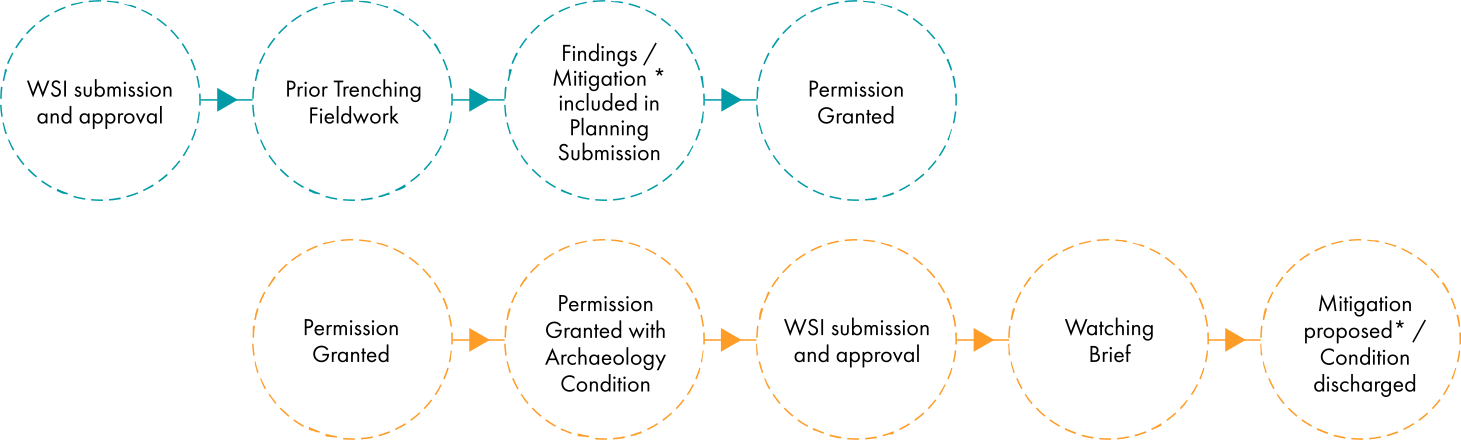
Where a development site may have buried archaeology, two approaches are generally accepted:
Prior Investigation


Watching Brief
Prior investigation allows archaeologists to survey a percentage of the development site before planning permission is granted, with any necessary mitigation incorporated at the design stage. While this process carries some risk – since permission for the overall project is not guaranteed – it helps reduce potential construction delays by addressing any required archaeological mitigation early.
A watching brief involves live monitoring of groundworks once Planning Permission has been granted by way of a Condition on the Consent, with all works required to stop if archaeologically significant material is unearthed. This risk can delay the construction timeline but is only necessary after consent is granted.